The Pigmentation Guide
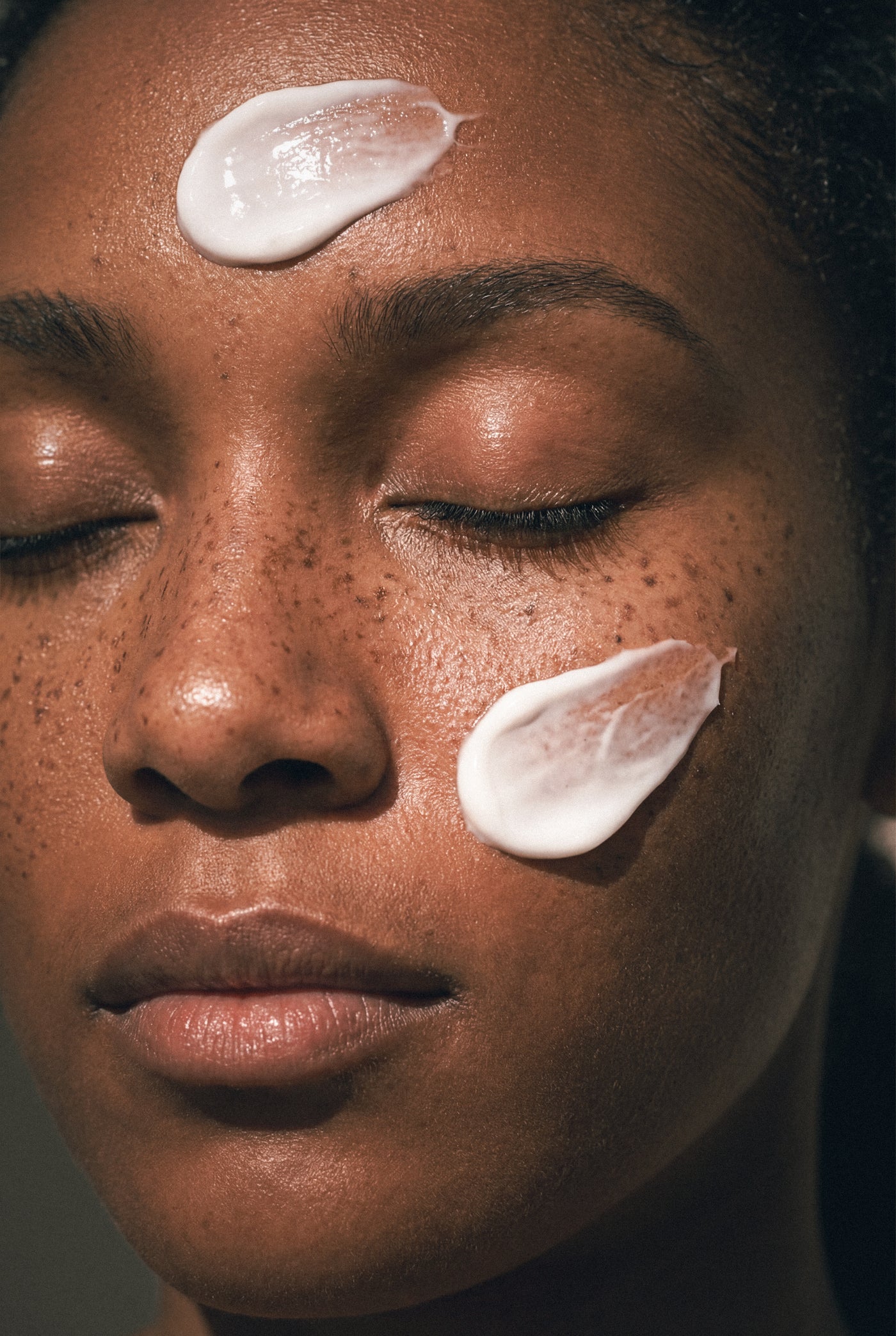
How to Keep Freckles From Coming Back After Laser.
Lasered freckles don't always stay gone. The cells that made them are still in your skin, and new UV brings them back without maintenance. The four things that hold the result through summer, in priority order: SPF, topicals, seasonal timing, and when a top-up is worth it.

You finished your freckle removal course. The spots cleared. Your face looks the way you hoped it would at the end of summer. The question now is how the result holds.
Freckles are genetic. The cells that made them are still in your skin after treatment. What changes with laser is the pigment, not the biology. Staying clear is a maintenance problem, not a one-and-done one. Maintenance is mostly four things done consistently, in priority order.
Why freckles come back in the first place
Two forces drive freckle return, and they work together.
The first is genetics. Freckles, clinically ephelides, exist because the melanocytes in freckle-prone skin are programmed to respond to UV exposure by producing a lot of pigment quickly. Q-Switched Laser clears the pigment those cells have already produced. It does not change the cells themselves. The melanocytes still behave the way they always have. Given UV exposure, they will produce new pigment.
The second is UV exposure. Every time the skin meets sunlight unprotected, those melanocytes start producing melanin again. In freckle-prone skin, that production clusters and surfaces as visible pigment within days to weeks of exposure. A single weekend at the beach without SPF can re-seed freckles across the bridge of the nose and cheeks, even on skin that cleared beautifully six weeks earlier.
So the maintenance logic is simple. You cannot change the melanocytes. You can control what reaches them. That is the whole game.
SPF is the non-negotiable
If you only do one thing for freckle maintenance, do this one. Daily, broad-spectrum SPF 50+ on every part of the skin that was treated, every day, indoor and outdoor, regardless of season.
The reason SPF has to be non-negotiable for freckle maintenance, more so than for the average client, is that freckle-prone skin reacts to UV much faster than average skin. Incidental UV is the light you get walking to your car, sitting near a window at work, driving, walking between the school gate and your front door. It adds up. It gets through. Melanocyte activity restarts in freckle-prone faces, and the freckles begin to surface again. Clients who only go in the sun on weekends still find their freckles returning within a season.
A few specifics. Use a mineral (zinc oxide or titanium dioxide) or hybrid formula rather than pure chemical filters where you can. Mineral SPF sits on the surface and reflects UV, which suits post-laser skin that may still be recovering barrier function. Apply a proper face-sized dose, not a thin smear; roughly half a teaspoon for face and neck. Reapply every two hours when outdoors, and once more if you have been swimming, sweating, or towelling your face. A high-SPF foundation does not count as your sunscreen layer. Sunscreen first, makeup over the top.
One more thing. UVA, the wavelength that drives most pigmentation change, is present all year and penetrates glass. Winter light, cloudy-day light, and light through your car window all count. Every day really does mean every day.
Topical supports that actually do something
Sunscreen is the front line. Topicals are the second line. A small number of ingredients have strong evidence for keeping freckle-prone skin quiet between sessions.
Vitamin C (specifically L-ascorbic acid) is the most useful morning ingredient. It neutralises free radicals generated by UV and visible light before those free radicals can trigger melanocytes to ramp up pigment production. Used under SPF, it reduces how much new pigment the skin makes in response to a given light dose. Look for a stable 10 to 20 percent L-ascorbic acid serum and use it every morning.
Niacinamide (vitamin B3) works on a different step of the same pathway. Where vitamin C prevents pigment activation, niacinamide interrupts pigment transfer. Melanocytes produce melanin in little packages called melanosomes, which are then handed off to surface skin cells (keratinocytes) where the pigment becomes visible. Niacinamide slows that handoff. Over weeks, skin tone reads more even and new freckles surface less readily. A 5 percent niacinamide serum or moisturiser, morning or evening, is the standard dose.
Tyrosinase inhibitors are the heavier lifters. Tyrosinase is the enzyme melanocytes use to manufacture melanin. Inhibit the enzyme and you slow the whole production line. Ingredients in this family include alpha arbutin, kojic acid, tranexamic acid (topical), and azelaic acid. These are typically programmed by a therapist rather than picked off a shelf, because the right ingredient and strength depend on your skin type and how reactive your freckle pattern is. They are most useful in the weeks and months following a laser course.
Time the routine to the seasons
Freckle maintenance is not a flat line across the year. UV intensity changes, and so should the discipline.
Late spring through early autumn, roughly September to March in Melbourne, is the high-risk window. UV index regularly sits at 8 or above through summer, and that is when freckle return happens fastest. This is the window for maximum SPF discipline, hats, seeking shade between 10am and 4pm, and keeping a vitamin C plus niacinamide routine going every day.
Late autumn through early spring is the repair-and-maintenance window. UV is lower, the skin is less reactive, and it is the right time to run stronger topical cycles (programmed by your therapist for your skin and your freckle pattern) and to schedule any top-up laser sessions. Heading into winter with a calm, even complexion means heading into the next summer with less pigment waiting to be re-triggered.
When a top-up session makes sense
Most clients who complete a freckle course will want a maintenance session at some point. The right time is set by the pigment, not the calendar.
The right moment to think about a top-up is usually late autumn or early winter. UV is dropping. The skin has the longest clear-weather runway to recover before summer returns. Coming out of winter with a top-up behind you means starting the high-UV season with the least pigment to protect.
A top-up is a smaller piece of work than the original course. The session itself is the same kind of treatment as before, with the same kind of clearance window. The difference is that the pigment that has resurfaced is less than what you started with, because the maintenance has held.
How long between courses depends on UV history, the topical routine, and how active the freckle genetics are. A VISIA scan at consultation will show what has surfaced since the last course. The consultation is where the next phase gets planned.
The honest frame: manage, don't expect prevention
A lot of pigmentation marketing implies that laser is permanent if you just do the right aftercare. For freckles specifically, that is not true, and we would rather be straight about it.
Laser clears freckles. Genetics, UV, and time bring them back in some form, eventually. The goal of a well-run maintenance routine is not to prevent that entirely. It is to stretch the time between courses, reduce how much pigment surfaces, and keep the skin in the best-looking state possible across years. Done well, that looks like a mostly clear complexion year-round, with a planned top-up when the pigment warrants it.
That is the maintenance partnership. You handle the daily discipline. SPF, vitamin C, niacinamide, programmed topicals. The dermal therapist handles the re-set when the time is right. Between you, the result holds.
At the clinic
The freckle removal work itself sits on Pink's pigmentation treatment page. Top-ups are scheduled off a VISIA scan that maps what has surfaced since the last course.